
Learning Session 10: Remember You are Wild
Online learning sessions using dialogue to explore the workings, developments, (im)possibilities, and emerging insights of diverse approaches and praxes for Co-creation with the More-than-Human world
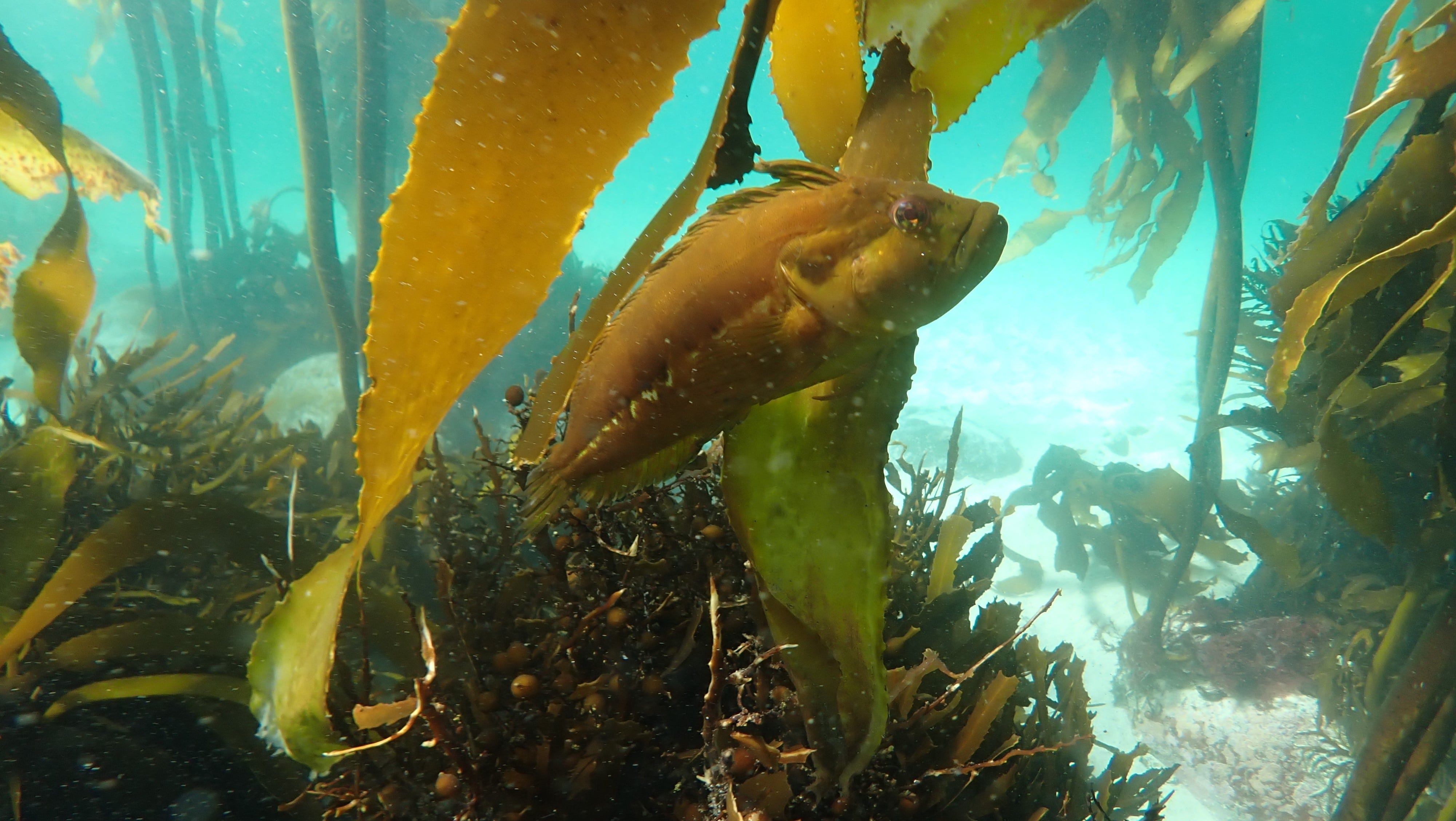
The 10th learning session of the Co-creation with the More-than-Human sandbox in February 2026 on Remember You are Wild explored the work of the Sea Change Project with Swati Thiyagarajan, nature storyteller and part of the team behind the Oscar-winning film My Octopus Teacher.
The session examined the proposition that the ecological crisis is not only a crisis of systems, but a crisis of relationship—rooted in a deep disconnection between humans and the living world. Drawing on immersive, science-based storytelling and long-term engagement with the Great African Seaforest, Swati unpacked what it means to remember we are wild—not as an idea, but as an embodied practice that reshapes perception, behavior, and ultimately, what becomes possible in conservation.
What follows is a synthesis of key questions, insights, and cross-cutting threads from the dialogue.
🌿 Learning Session 10 (February 2026) — Synthesis
Remember You Are Wild, with Swati Thiyagarajan (Sea Change Project)
What if the ecological crisis is not primarily a failure of knowledge or policy—but a failure of relationship? And if connection is something we must remember, not learn, what does it actually take to recover it in a modern, highly mediated world?
1. What does it mean to say the root crisis is disconnection?
Disconnection as the underlying driver
Climate change, biodiversity loss, and ecological degradation emerge from a deeper condition in which humans experience themselves as separate from the living world. From that perceived separation, extraction becomes normalized, and systems are designed without reference to the wellbeing of the larger living systems they depend on.
“Remembering” rather than learning
Framing this as remembering is significant: it suggests that the capacity for connection is not absent, but dormant. The ability to feel kinship with other beings, to sense belonging within ecosystems, is something humans already carry—but which has been eroded through modern ways of living.
Domestication of perception
Modern life has not only distanced humans physically from ecosystems, but also narrowed perception itself. Food, seasons, animal life, and ecological processes become abstracted or invisible, shaping a worldview in which nature appears external rather than relational.
🌱 Seed:
Disconnection is not just about physical distance from nature—it is a way of perceiving the world that makes separation feel normal, and in doing so, quietly legitimizes extraction and indifference.
2. What is “emotional ecology”—and how do you navigate the tension with rigor?
Emotional ecology as a missing layer
Conservation efforts often rely on science, policy, and economics, yet these alone rarely shift behavior at scale. Emotional ecology works at the level of felt relationship—how people experience, value, and connect with the living world.
Curiosity and wonder as entry points
Rather than beginning from fear or urgency, this approach often starts with curiosity—paying attention, becoming interested, allowing wonder to emerge. These are not superficial emotions, but gateways into deeper forms of relationship.
Rigor and emotion are not opposites
The work does not position emotion against science, but alongside it. Scientific knowledge provides understanding, while emotional connection creates the conditions for that understanding to matter. Without connection, knowledge risks remaining inert.
The challenge of legitimacy
In many institutional contexts, emotional approaches are seen as secondary or lacking rigor. Yet the absence of emotional connection is precisely what limits the impact of otherwise rigorous work.
🌱 Seed:
Data can inform and persuade, but without felt relationship it rarely compels change—emotional connection is not a soft layer on top of science, but the condition that allows knowledge to translate into care and action.
3. What is the “language of the wild”—and how do we lose (and recover) it?
A language beyond words
The “language of the wild” is not spoken, but sensed. It includes the ability to read patterns, track movement, notice subtle changes, and attune to rhythms and relationships within an ecosystem.
Loss through disconnection and disuse
This capacity fades when it is no longer practiced. Without regular immersion and attention, perception becomes coarse, and the subtle signals of the living world recede from awareness.
Tracking and attention as practices of recovery
Practices such as tracking—reading animal signs, following patterns in the landscape—train a different quality of attention. They rebuild sensitivity and restore a relational way of knowing that is otherwise lost.
🌱 Seed:
When the language of the wild disappears, it is not because the world has gone silent—but because we have lost the practices and attention required to remain in conversation with it.
4. Why storytelling—and what makes science-based storytelling work?
Story as a bridge into relationship
Storytelling allows people to enter into relationship with other beings in ways that data alone cannot. It creates emotional resonance, identification, and a sense of shared experience.
Why My Octopus Teacher resonated globally
The film did not succeed because it explained octopus biology, but because it revealed a relationship—one that unfolded over time and invited viewers to feel part of it. The specificity and intimacy made it universally relatable.
Science-based storytelling as integration
The work combines rigorous ecological research with narrative, ensuring that what is felt is also grounded in reality. This integration allows stories to carry both emotional weight and ecological truth.
From individual impact to collective change
While stories can move individuals deeply, translating that into sustained behavioral or systemic change remains an ongoing challenge that requires additional layers of engagement.
🌱 Seed:
Stories do not change the world by delivering information—they change it by reshaping what people feel connected to, and therefore what they are willing to care for and protect.
5. What changes when we name, see, and relate differently?
Naming as recognition and presence
Naming the Great African Seaforest did more than just describe a place—it brought it into collective awareness as a distinct, living system with identity and significance.
Visibility as a driver of protection
What becomes visible becomes harder to ignore. Recognition can shift how ecosystems are valued, discussed, and ultimately protected within public and policy spheres.
Visibility as a double-edged dynamic
At the same time, increased visibility can attract pressure—tourism, exploitation, or commodification—making the act of revealing something both protective and potentially risky.
🌱 Seed:
To name and make something visible is to bring it into relationship with the human world—and with that, into both care and potential vulnerability.
6. What tensions arise in combining storytelling, science, and relationship?
Documenting vs relating
Filmmaking and research require observation, framing, and ultimately representation—capturing moments, behaviors, and interactions in ways that can be shared. Yet deep relationship with the more-than-human often calls for the opposite: restraint, non-interference, and allowing things to unfold without intrusion. This creates an ongoing tension between the impulse to witness and share, and the responsibility to not disrupt or instrumentalize the very relationships being formed.
Visibility vs extraction
Bringing attention to ecosystems like the Great African Seaforest can strengthen recognition, care, and protection. At the same time, visibility can attract increased human presence—tourism, commercial interest, or other forms of pressure—that risk degrading what is being protected. Visibility is therefore not inherently positive; it must be navigated with care.
Integrity under scale
As storytelling reaches global audiences—as seen with My Octopus Teacher—the challenge becomes maintaining depth, nuance, and authenticity. There is a risk that complex relationships are simplified into narratives that travel well, or that nature becomes instrumentalized as a vehicle for impact rather than engaged with on its own terms.
🌱 Seed
To make something visible is to bring it into relationship with many more humans—and with that, into both care and pressure, protection and potential harm.
7. What has this work revealed about the relationship between storytelling, science, and conservation?
Integration rather than separation
The combination of storytelling, research, and daily immersion creates a form of “living science” where knowledge is not only produced, but continuously experienced and embodied.
Tensions within practice
Filmmaking, research, and relationship do not always align seamlessly. Choices about what to show, how to engage, and how to represent other beings involve ongoing ethical navigation.
New pathways into conservation
By engaging people emotionally and relationally, storytelling opens pathways into conservation that differ from traditional approaches, expanding who participates and how.
🌱 Seed:
When science, story, and relationship come together, conservation shifts from something we understand intellectually to something we experience as part of our own lives.
Cross-cutting insight threads
Disconnection → Extraction → Crisis
A perceived separation from the living world underpins many forms of ecological harm; reconnecting shifts the foundation from which decisions are made.
Attention → Relationship → Care
What we learn to notice shapes what we come to value, and ultimately what we are willing to protect.
Story → Feeling → Action (not guaranteed)
Stories can open emotional connection at scale, but the pathway from feeling to sustained action remains uncertain and requires further development.
Visibility → Protection ↔ Exposure
Making ecosystems visible can strengthen recognition and protection, while simultaneously increasing their exposure to new pressures.
Closing
These sessions are not designed to arrive at fixed answers, but to surface how different approaches work in practice. Each conversation reveals not only how and where they hold, but also the tensions and questions that remain unresolved—and that continue to invite further inquiry.
Over time, these syntheses form a growing body of insights into what co-creation with the more-than-human world might require, across contexts and practices.
The Co-creation with the More-than-Human sandbox is a collaboration between The Repatterning Collective and Kincentric Leadership.
If you’d like to receive announcements of our popular monthly online learning sessions, which use live dialogue & discussion to explore different approaches and praxes for meaningful co-creation with the more-than-human (natural) world, then register here for the sandbox’s mailing list.
To receive syntheses of Learning Sessions and Field Dialogues in your inbox, subscribe below.
We donate our time and energy to this sandbox. If you value this space, consider co-funding this work by leaving us a tip.